Jakob Russell · 19 September 2026
Tracing the Evolution of Content Adaptation Methods in Response to Changing Market Fragmentation Dynamics
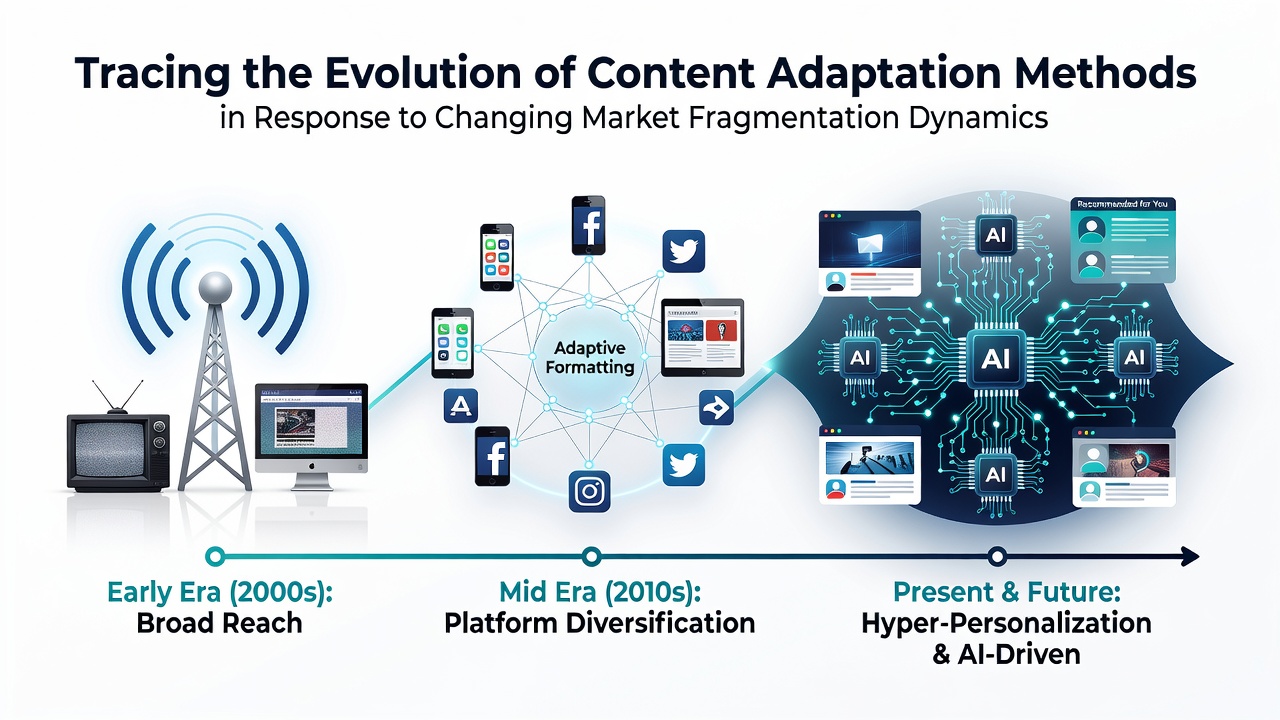
Market fragmentation has reshaped how organizations distribute and modify content since the early days of digital media, and researchers trace this evolution through distinct phases driven by technological advances alongside regulatory shifts. Early adaptation methods relied on basic localization techniques that adjusted language and imagery for regional audiences, yet these approaches gave way to more sophisticated strategies as platforms proliferated and consumer behaviors splintered across devices and networks.
Initial Approaches in the Pre-Digital Era
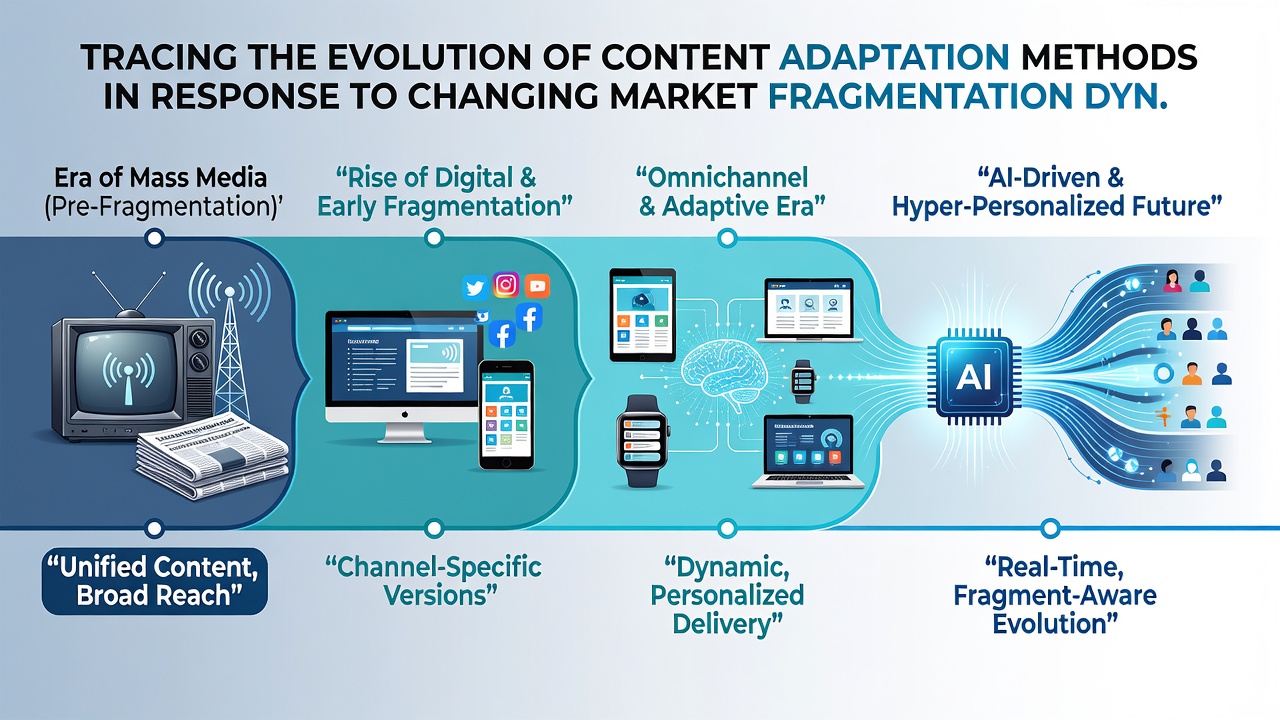
Content creators in the 1990s adapted materials primarily through manual translation and cultural tweaks for print and broadcast channels, and studies from that period show limited tools existed for real-time adjustments. Organizations often produced separate versions for different countries, which created inefficiencies as global trade expanded and audiences demanded faster access to tailored information. Data from industry reports indicate that these static methods worked adequately when markets remained relatively consolidated around major media outlets.
But here's the thing: the internet introduced initial fragmentation by enabling niche websites and forums, which forced early adopters to experiment with modular content blocks that could swap elements like currency symbols or contact details. Experts at research institutions documented how companies began using basic scripting to detect user locations and deliver adjusted text, although full personalization remained resource-intensive until database technologies matured.
Digital Expansion and Platform Proliferation
The 2000s brought widespread mobile adoption and social networks, and this acceleration fragmented audiences into smaller segments defined by platform preferences and device capabilities. Content adaptation evolved to include responsive design frameworks that automatically resized images and reflowed text across screens, while metadata tagging allowed search engines to surface region-specific results. Figures from academic analyses reveal that organizations investing in these techniques saw improved engagement metrics compared to those maintaining single-format outputs.
Observers note that regulatory developments played a parallel role, with bodies such as the European Commission issuing guidelines on cross-border data flows that influenced how content teams handled user preferences. One study revealed that compliance requirements prompted the integration of consent mechanisms directly into adaptation workflows, ensuring materials aligned with local privacy standards without manual intervention for each market.
Advanced Techniques in the 2010s and 2020s
Artificial intelligence and machine learning entered the picture around 2015, enabling dynamic content generation that analyzed user data to assemble personalized experiences on the fly. Platforms began employing algorithms to test multiple variants simultaneously, and results from controlled experiments showed measurable lifts in retention when adaptation accounted for behavioral signals like scroll depth and click patterns. This period also saw the rise of headless content management systems that decoupled creation from distribution, allowing seamless repurposing across emerging channels such as voice assistants and augmented reality interfaces.
What's interesting is how supply chain disruptions and geopolitical events further complicated fragmentation, leading teams to incorporate real-time sentiment analysis from diverse linguistic datasets. Government statistics compiled by agencies including the Australian Competition and Consumer Commission highlight rising consumer expectations for seamless experiences regardless of entry point, which pushed developers toward unified data layers supporting rapid localization.
Current Developments Heading into September 2026
As of September 2026, new interoperability standards proposed by international trade groups are set to influence adaptation methods by requiring consistent data formats across competing ecosystems. Organizations now integrate predictive models that anticipate fragmentation caused by emerging regulations in regions such as North America and Asia, adjusting content structures before deployment. Research papers from university consortia indicate these proactive measures reduce revision cycles by integrating compliance checks into the adaptation pipeline itself.
People who've tracked these changes observe continued reliance on edge computing to deliver adapted content with lower latency, and case examples demonstrate how retailers use this approach to swap promotional elements based on local inventory levels without central server bottlenecks. The ball's in the court of smaller platforms that must now compete with established players offering built-in adaptation toolkits.
Conclusion
The trajectory of content adaptation methods reflects ongoing responses to market fragmentation, from manual regional edits to AI-orchestrated personalization that accounts for regulatory, technological, and behavioral variables. Data shows continued innovation in this space will hinge on integration with global standards emerging in late 2026, and those who've studied the patterns expect further refinement as new channels and audience splits appear. Organizations that maintain flexible architectures position themselves to handle these dynamics through systematic updates rather than reactive overhauls.